
Dimraeth: Indie Co-op Game Guide to Gameplay and Builds
Explore Dimraeth, an indie co-op game for solo adventurers and parties of up to eight. Here is how its combat, character builds, and shared worlds fit together.
Dimraeth at a glance
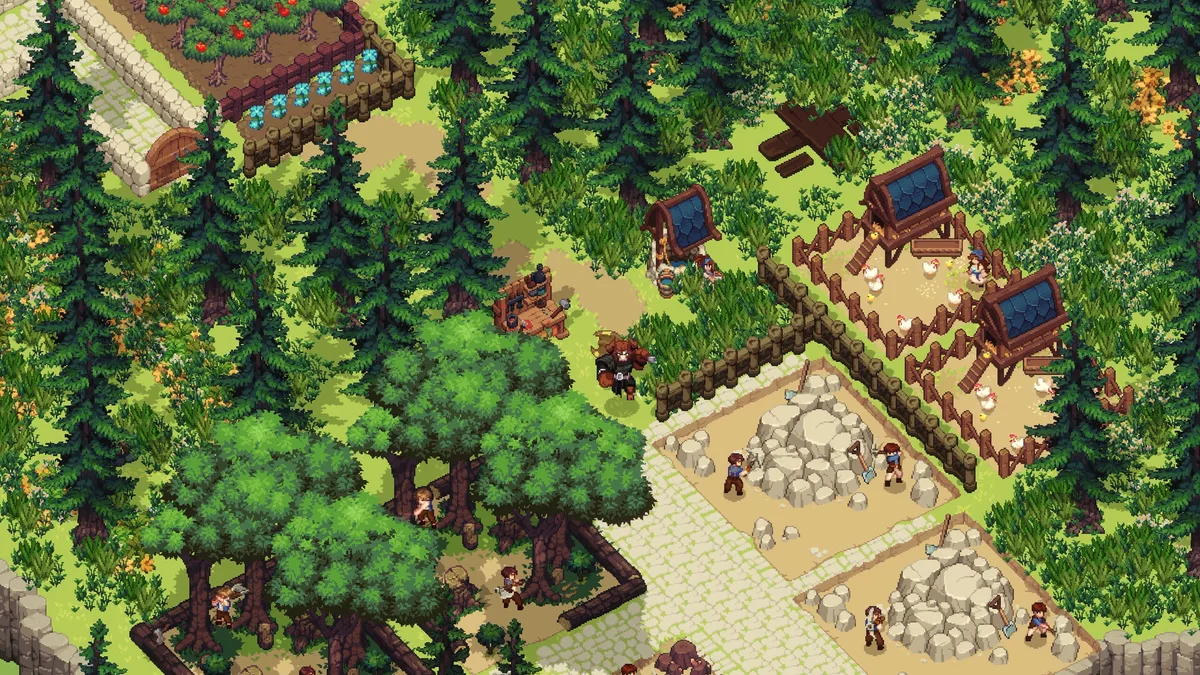
Dimraeth is an indie co-op action RPG from Mudtek about developing a hero and a home in a handcrafted pixel world. You can adventure alone or bring a party of up to eight. Its appeal is the connection between character choices, combat, and preparation: an expedition should give you reasons to rethink what you bring on the next one.
Our recommendation is to watch it if your ideal group game involves discussing builds between sessions. If you mainly want a short, self-contained adventure, wait for clearer reports on the campaign’s scope and completion state. The interesting question here is how well the systems sustain a shared campaign over time.
- Developer / publisher
- Mudtek
- Platform
- PC via Steam
- Players
- 1–8; online co-op
- Release model
- Early Access
References: Steam listing and official website.
Watch the official Dimraeth trailer
Release date, unlock time, and the old demo
In its September 13 announcement, Mudtek confirmed September 15, 2026 at 18:00 CEST for the Early Access launch. That is 16:00 UTC, noon in New York, and midnight on September 16 in Shanghai. The studio also warned that Steam’s countdown could show an earlier time because of a scheduling mistake.
When we checked, the store still marked the game as unavailable. Use that announcement for the planned unlock time and the live store for actual access. A date in a search result alone does not tell you whether the purchase or installation button is available in your region.
The previous demo closed on July 15. Mudtek’s July announcements explain that it had diverged substantially from the Early Access build. An older video or wiki page describing a playable demo therefore is not confirmation that you can download it today.
What do you actually do in Dimraeth?
The store description links exploration and quests with fighting, gathering, recruiting allies, and developing a stronghold. It also describes relationship progress that can open conversations, personal quests, and potential romances.
A useful way to approach that combination is to set an expedition goal before leaving home. Perhaps your group wants to understand one difficult encounter; perhaps it wants to follow a character’s story. Without that shared objective, a party can spend an evening pulling in different directions, even when everyone enjoys the individual activities.
We would judge the pacing by whether those activities help each other. A good preparation phase should leave you eager to return to the field. A good outing should produce a discovery you can act on, rather than simply lengthen a shopping list. That relationship matters more than the raw number of things the game lets you craft.
Race, class, and Archetype: why your first choice matters
Mudtek’s character-creation breakdown describes race as a starting combat kit, while the race–class pairing creates an Archetype with its own tree and passive. Its Minotaur Brawler example gains extra stamina when investing in Strength.
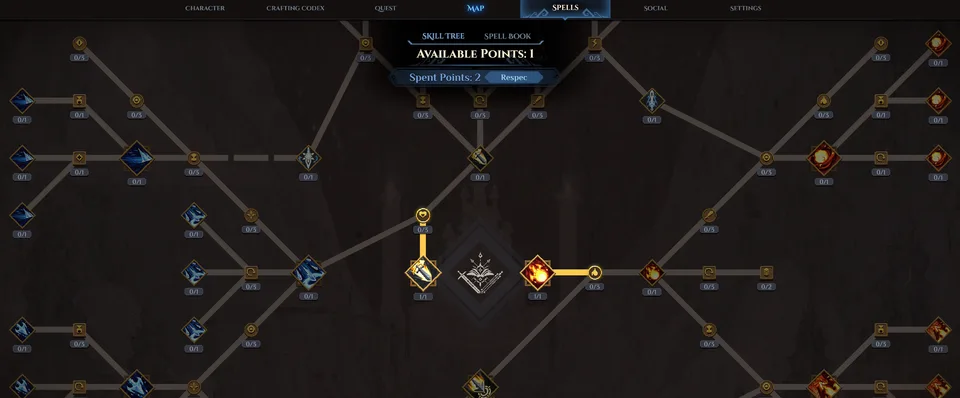
Attributes cost XP, and the price depends on the pairing. An off-stat investment can therefore leave you with fewer total attribute points at the level cap. A hybrid is a tradeoff: reaching a particular spell requirement competes with further investment in your natural strengths.
Plan toward a tool, not an abstract “balanced” build
Our starting advice is to identify one ability you want, read its requirements, and decide what you are willing to delay to reach it. Spreading points evenly is not automatically safer when those points have different costs. There is not enough verified launch-build evidence here to label a particular pairing the best beginner choice.
The same developer post describes Hero, Stoic, Scholar, and Joker Personas as influences on dialogue options. Treat that as a role-playing preference rather than a reason to chase combat efficiency.
How combat connects basic attacks and magic
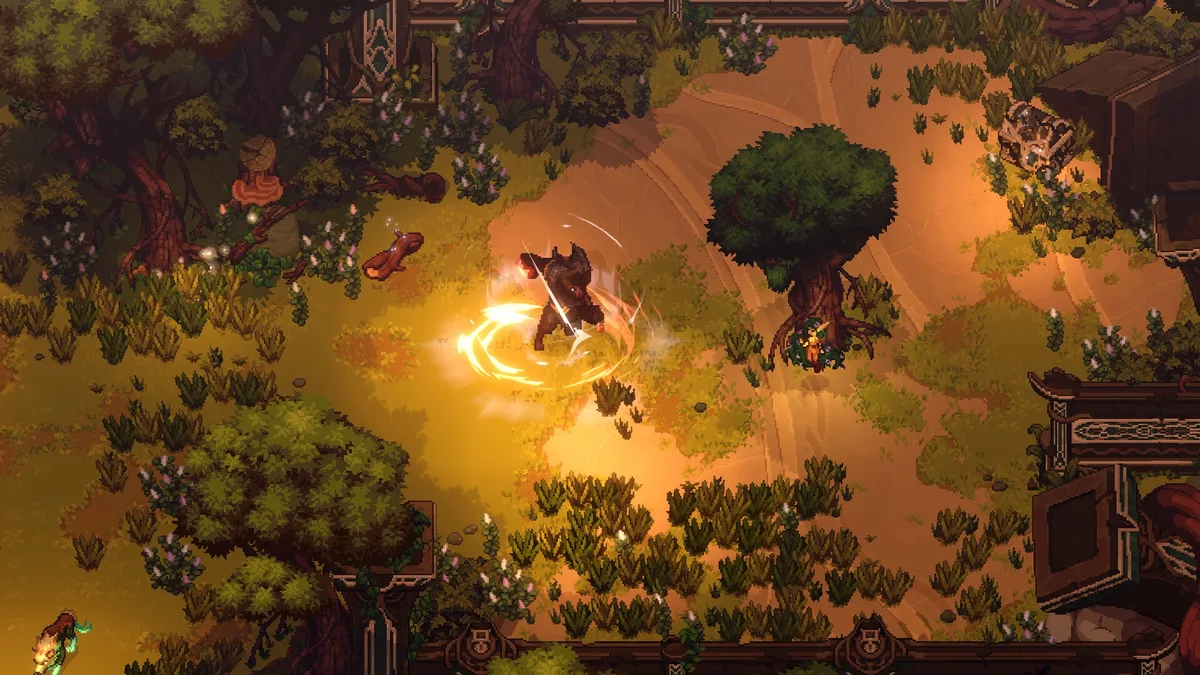
The developer’s spell-system explanation distinguishes Stamina for physical actions from Concentration for casting. Landing basic attacks restores Concentration during combat; the third hit is a Final Attack that can trigger effects. This gives ordinary attacks a purpose within a spell-focused character’s rhythm.
The post’s Fireball examples include a charged variant, a piercing option, a faster but weaker version, and a version that spends Burning stacks for extra damage. Effects can accumulate as stacks and be consumed by other abilities.
Choose a sequence you can explain
Our suggested starting exercise is to describe your intended sequence in one sentence: what sets up the target, what takes advantage of that setup, and how you recover afterward. If two choices want to spend the same setup, investigate their interaction before building around both. A longer list of attractive abilities does not necessarily produce a coherent rotation.
Exact timings and damage comparisons need testing in the release build. For now, these developer examples explain the intended decision-making more usefully than a speculative damage tier list.
Crafting and building: preparing for the next attempt
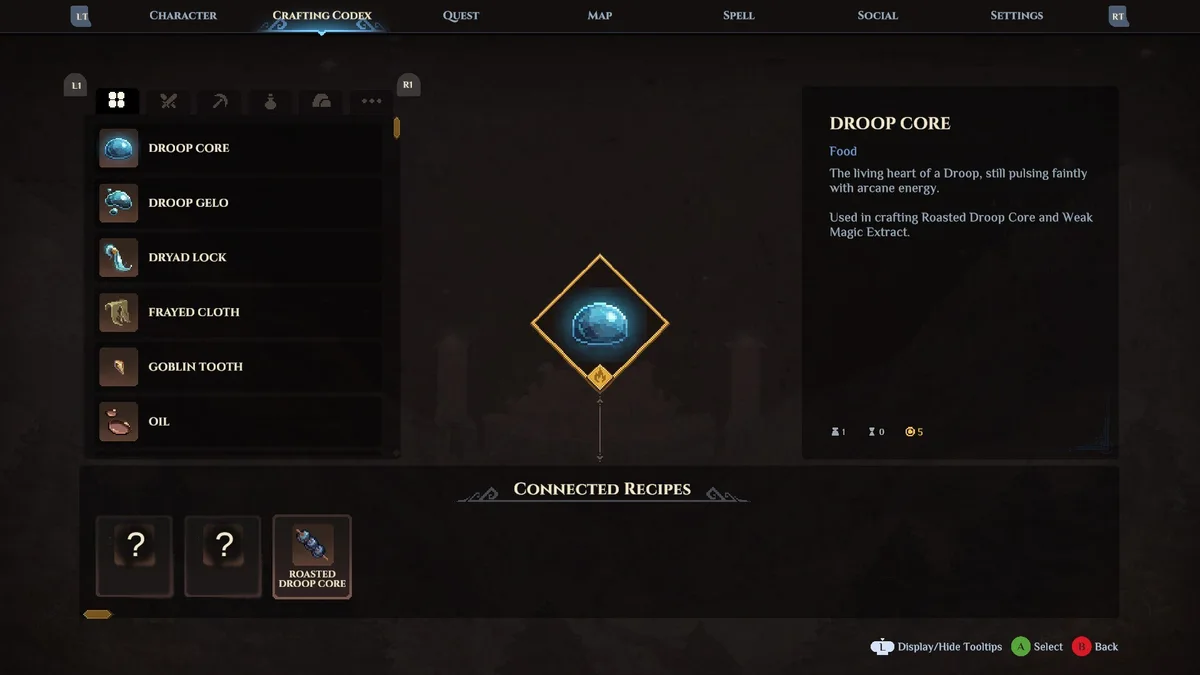
In “Prepare, Restock, Push Further,” Mudtek describes recipes found through exploration or discovered by placing ingredients into crafting slots. Its Crafting Codex indicates whether an ingredient still has undiscovered uses. Some recipes need stations.
The post distinguishes longer food buffs from recovery potions and brief boosts. It also describes throwable healing potions and offensive consumables that can cover a weakness in your build. This is the developer’s design explanation, not a guarantee that every recipe is present unchanged at launch.
Make the next crafting task solve a known problem
Our advice is to decide what went wrong before spending an evening gathering. Did you run out of recovery, struggle to reach an enemy, or take too much of a particular damage type? Preparing for a specific problem gives a crafting session a clear endpoint.
Equipment crafting deserves a version check: the January post described it as a later plan, while the newer store text mentions crafting equipment. Neither establishes a complete launch recipe catalog. Avoid treating an old development plan as a current walkthrough.
Co-op, hosting, and what happens to your progress
The official FAQ describes player-hosted, peer-to-peer sessions, with no dedicated servers or local split-screen support. It also confirms that the game is designed for solo play; a full party is not a requirement.
Steam separates portable hero progress from world progress:
| Travels with your hero | Stays in the world |
|---|---|
| Level, equipment, inventory | Story progress |
| Spells and personal progression | Recruited allies and buildings |
Our practical interpretation is to pick one regular campaign world and agree on when to advance its story. Someone who misses a session may care about the events they missed even if their hero remains usable. Agreeing on that expectation is more helpful than assuming everyone means the same thing by a casual co-op campaign.
For an initial session, leave time to test joining and reconnecting before beginning a major objective. That is a general planning recommendation, not a claim that we encountered connection problems in Dimraeth.
Why the pixel world deserves a closer look
Art director Vancris Balanon’s environment-design post gives Earlwood a more specific identity than a generic fantasy village. The team drew coastal inspiration from Dover’s white cliffs, Scotland’s Fingal’s Cave, and Vietnam’s Ghềnh Đá Đĩa. Shipwreck salvage and boat-making materials helped shape its architecture.
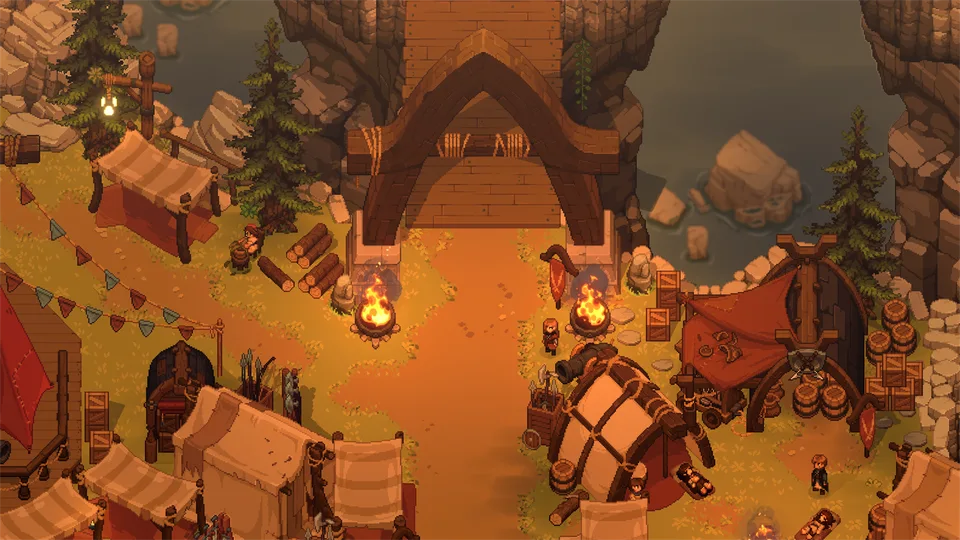
That is an appealing basis for exploration. When architecture and geography tell a consistent story, a settlement can become recognizable without a quest marker announcing its importance. Our interest is in whether that care remains visible as players move through it at normal speed, looking for routes and objectives.
The official cast introductions provide another reason to pay attention. Manga is a minotaur blacksmith whose rejection of violence shaped his exile; Befr is a warm merchant with hints of a much longer history. Those details suggest room for quieter encounters between battles. They do not establish how extensive the finished questlines will be.
What is announced for Early Access?
The September 2 content update names the Elf race and Shadow class as additions. It also announces an expanded Wildwood, Goblin Caves, regional bosses, nine pets, a skill-tree overhaul, difficulty options, and a level cap of 25.
The advertised eight-race, six-class combination represents the broader roster ambition. Read the current content announcement before assuming all 48 possible pairings are selectable in the opening version.
Mudtek estimates an Early Access period of roughly 18–24 months in the Steam Q&A, without a fixed completion date. It also plans price increases as content grows. These are plans, not a promised completion schedule or a verified launch price.
For a buying decision, we would give more weight to what the available build supports than to how attractive the finished vision sounds. In particular, a group seeking a complete story should look for confirmation of the current stopping point. A level cap alone cannot tell you how many satisfying evenings a campaign contains.
A practical plan for your first session
This is our suggested approach to evaluating the game, rather than a tested opening route. Keep the first session focused enough that you can tell what you enjoy and what still needs explanation.
- Make the controls comfortable. Spend a few quiet minutes checking movement, targeting, and the buttons you reach for under pressure. An uncomfortable binding can make a learnable encounter feel unnecessarily confusing.
- Choose one learning goal. Pick something observable, such as recognizing when an enemy leaves an opening. Trying to optimize every system immediately makes it difficult to identify what helped.
- Change one thing after a setback. If you alter several choices together, you may win without learning which change mattered. A useful retry answers a question.
- Let everyone finish reading. In a group, agree whether conversations are part of the shared experience or something people prefer to move through quickly. Different expectations can spoil a session before combat becomes an issue.
- Finish with a next-session objective. Record one place to revisit or one question to investigate. A specific starting point makes returning to a developing RPG much easier than a vague promise to do more quests.
Common questions
Is Dimraeth an MMO?
No. The official FAQ describes a small-group co-op RPG, not a massively multiplayer world. Do not plan around hundreds of other players or a persistent public server.
Does it support controllers or Steam Deck?
Mudtek’s FAQ lists keyboard and mouse, controller input, and Steam Deck support. That developer statement is distinct from a verified performance test or Valve’s compatibility rating. Check the current listing and recent device-specific reports if handheld play is your priority.
Can I play on a console or in a browser?
The official platform plan is PC through Steam; the FAQ has no confirmed console release. Dimraeth is covered here as an editorial feature, with no browser-play embed.
Is Simplified Chinese supported?
Yes. It appears in the current Steam language table. The September localization update is newer than the FAQ’s shorter launch-language list.
How long is the campaign?
We have not verified a current Early Access completion time. Old demo and playtest estimates should not be used as the full game’s length.
Who should keep Dimraeth on their radar?
The strongest fit, in our view, is a patient group that enjoys learning a game together and discussing why a plan worked. The prospect of a memorable campaign matters more here than reaching an impressive player-count limit. If your group already likes comparing notes after a session, this is a premise worth following.
We would be more cautious about recommending it to someone who needs a finished campaign, an established competitive meta, or firm evidence of long-term polish. Those are reasonable preferences, but official feature descriptions cannot settle them.
Dimraeth has enough specific design ideas to warrant attention. Our next step as prospective players would be to check the launch build’s reception, watch an uninterrupted stretch of ordinary play, and decide whether its pace suits the time we actually have.
Explore Dimraeth on Steam
Check current availability, regional pricing, hardware requirements, and the latest developer updates.
View Dimraeth on Steam ↗